The Alchemy of Lotus: A 135-Year Odyssey
An Exclusive Interview with the Guardians of Lin Heung Lau Craftsmanship
I. The Atmosphere: Where Time Slows Down
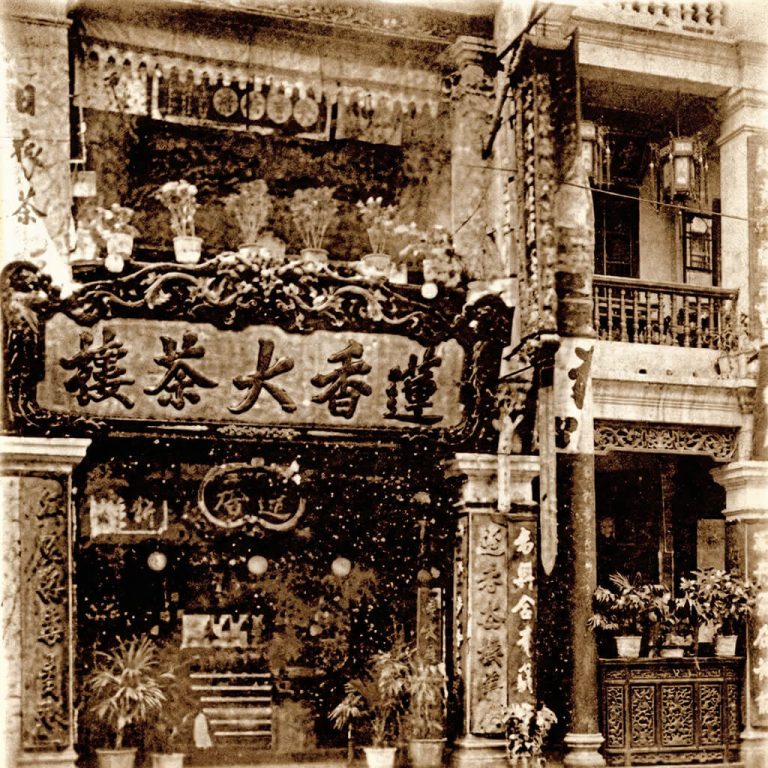
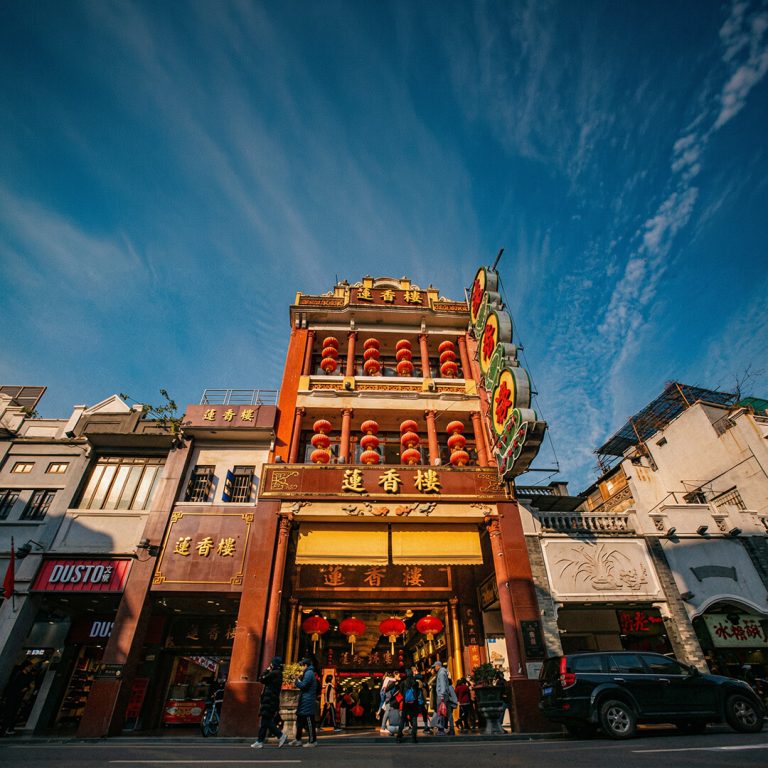
In the heart of Guangzhou’s Xiguan district, there is a threshold where the 21st century fades away. Stepping into the Lin Heung Lau (蓮香樓) workshop, the air changes—it becomes thick with the scent of roasted seeds and the warm, golden aroma of first-press peanut oil.
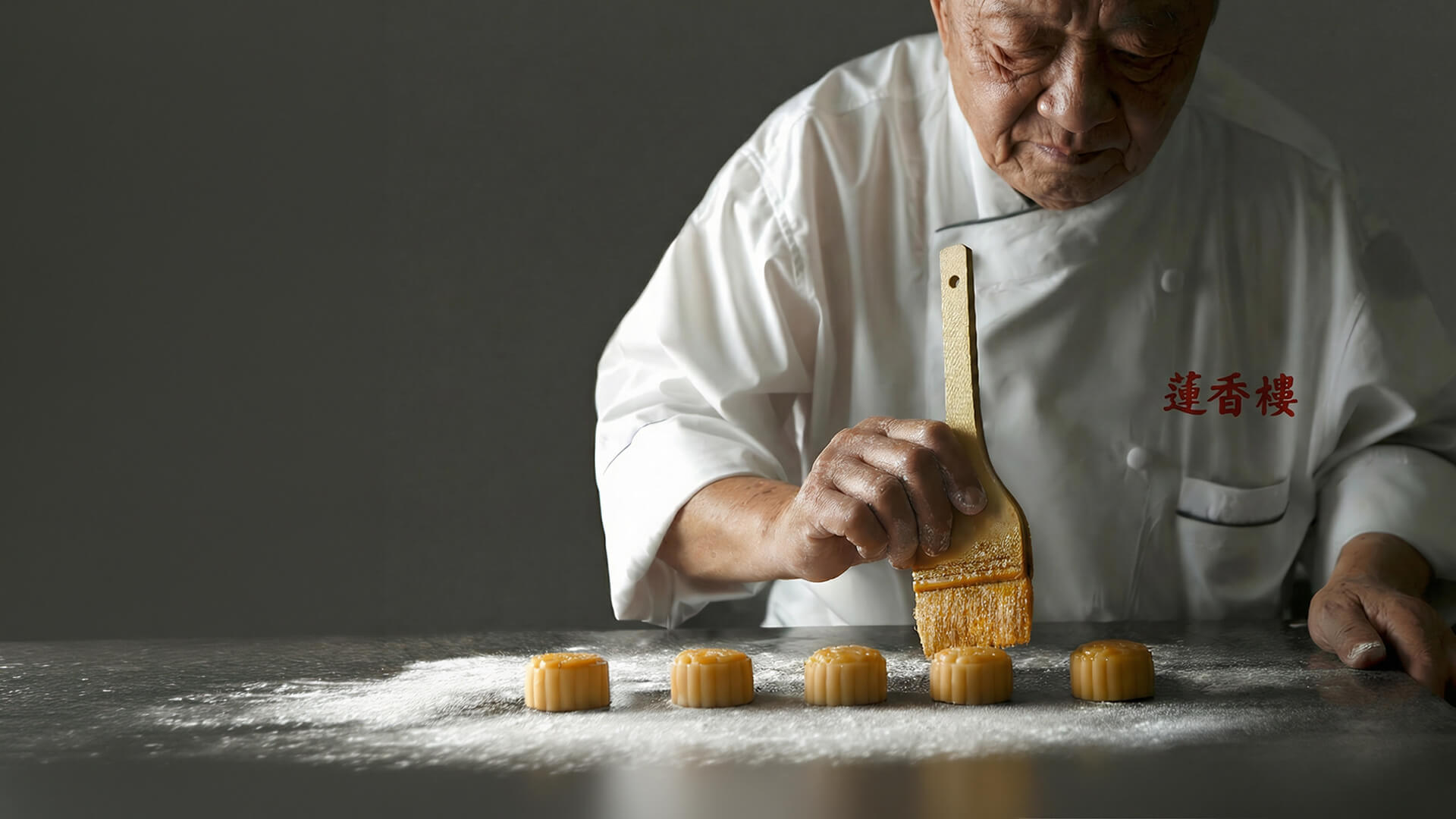
This isn’t a factory; it’s a sanctuary. Here, the rhythmic clack-clack of wooden spatulas against solid copper woks creates a heartbeat that has stayed steady since 1889. We are here to meet Master Liang, a man whose hands have stirred the legendary white lotus paste for over forty years.
II. The Interview: Chapter 1 — The Resistance of the Soul
Interviewer: Master Liang, we live in an era of “Instant Everything.” Just blocks away, automated lines churn out thousands of pastries an hour. Why does Lin Heung Lau still treat every batch as a day-long ritual?
Master Liang: (He rests his hand on a massive, gleaming copper wok, his eyes calm and sharp) “Efficiency is a trap. In the industrial world, they treat lotus seeds like gravel—grind them up, add sugar, and call it paste. But a lotus seed is a biological entity. It remembers the rain it drank in Hunan. Some batches are dry; some are tender.”
“A machine cannot feel ‘resistance.’ When I stir this mass, my arm tells me the exact micro-second when the starch granules have opened up enough to accept the oil. If you miss that window by even a minute, the texture becomes oily rather than silky. We don’t reject technology because we are old-fashioned; we reject it because it lacks the sensory intuition required for perfection.”
Interviewer: You mentioned the “Xianglian” seeds. Most consumers don’t realize that the “White” in White Lotus Paste isn’t achieved through bleach, but through labor.
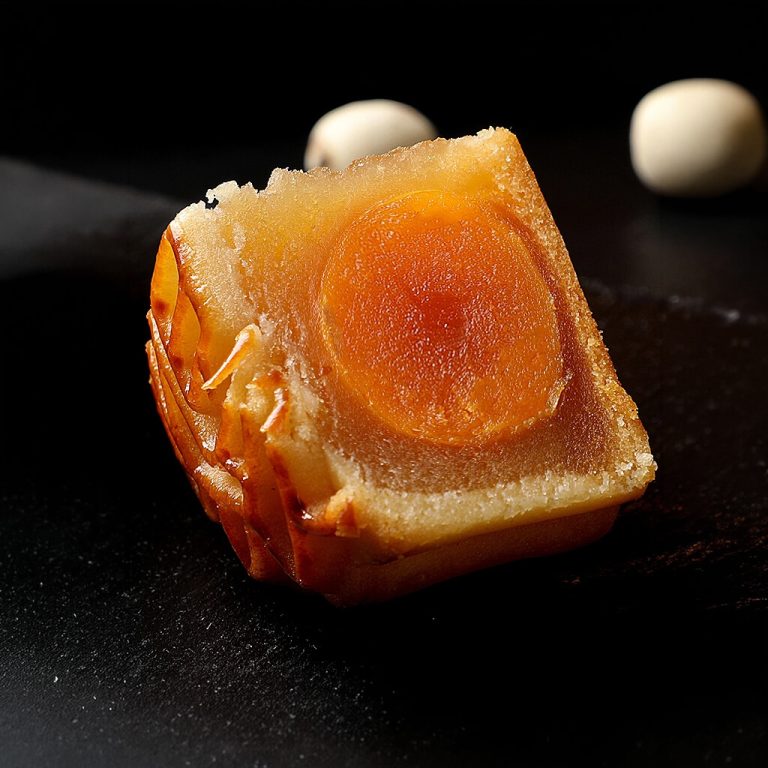
Master Liang: “Exactly. Industrial processors often steam the seeds with the skins on to save time, resulting in a dull, greyish tint. We insist on cold-water hydration and manual de-coring. The ‘bitter heart’ (the embryo) must be removed without bruising the seed. If you crush the heart, its bitterness bleeds into the paste. That clarity—that translucent amber hue you see in our mooncakes—is the reward for our patience.”
III. Chapter 2 — The Secret of the Solid Copper Wok
Interviewer: Let’s talk about your tools. Why solid copper? In modern food science, stainless steel is the standard for hygiene and cost.
Master Liang: “Stainless steel is the enemy of delicate sugar. It creates ‘hot spots.’ Because copper has superior thermal conductivity, it wraps the heat around the paste like a warm blanket. It’s gentle. In a copper wok, the lotus paste ‘breathes.’ It prevents the sugar from scorching at the bottom, which would create a burnt smell—what we call ‘staining the purity’ (坏了清白).”
“Furthermore, the constant manual agitation in copper allows for perfect emulsion. We are effectively performing molecular gastronomy that our ancestors perfected 135 years ago. We are pressing peanut oil into the very structure of the lotus starch until they become one.”
IV. Chapter 3 — Protecting the Intangible
Interviewer: As a guardian of a Provincial Intangible Cultural Heritage, do you worry that the next generation won’t have the “arm” or the “patience” for this?
Master Liang: “Every day. Being an apprentice here isn’t about learning a recipe; it’s about conditioning the body. It takes years to develop the muscle memory to stir for six hours straight without losing the rhythm. But heritage isn’t just about holding onto the past—it’s about proving that the past still tastes better. When a customer in London or New York opens a Lin Heung box and says, ‘This is exactly how it tasted in my grandfather’s house,’ that is the only validation we need.”
V. Chapter 4 — The Global Journey: Compliance without Compromise
Interviewer: Lin Heung Lau is now reaching global tables—North America, Europe, and Southeast Asia. However, international food safety standards like FDA, ISO 22000, and HACCP are notoriously rigid. How do you translate a 135-year-old “hand-felt” process into a strictly regulated global supply chain?
Master Liang: “That was our greatest challenge. People think ‘traditional’ means ‘disorganized,’ but it’s the opposite. Our ancestors were the original masters of quality control. Today, we’ve bridged the gap. We still stir in copper, but we do it in a clean-room environment that rivals a laboratory.
We’ve digitized Master Liang’s ‘intuition.’ We’ve analyzed the molecular structure of our emulsion to ensure it meets global stability standards without adding artificial preservatives. The goal is to ensure that a mooncake arriving in New York has the same microbiological purity as it does in Guangzhou, while retaining that ‘Handcrafted Warmth’ that a machine-made product lacks.”
VI. Chapter 5 — The Inseparable Bond: Pastries and the Tea House
Interviewer: You often say that Lin Heung Lau’s pastries cannot be understood without the “Yum Cha” (Tea House) culture. Why is that?
Master Liang: “Because our pastries were born to be enjoyed with tea. In our historic tea houses, the bitterness of the Pu-erh tea and the velvety sweetness of the white lotus paste perform a duet. They are two halves of the same soul.
When we develop a recipe, we don’t just think about the taste of the bun or the cake; we think about the ‘Atmosphere’ of the tea house. We are selling a piece of the Lingnan Lifestyle. Whether you are eating our snacks in a busy office in London or a quiet home in Melbourne, you are participating in a 100-year-old Guangzhou morning.”
VII. Epilogue: The Future of the “Original House”
Interviewer: Finally, if you could send a message to the foodies and heritage lovers across the globe who are discovering Lin Heung Lau for the first time, what would it be?
Master Liang: (He takes a moment, looking at the glowing amber paste in the wok) “I would tell them that in a world of mass-produced clones, there is still something that is made with the hands, for the heart. Lin Heung Lau isn’t just a brand; it’s a promise. As long as there is a flame under our copper woks, the ‘Lotus Fragrance’ will never fade. We are not just preserving a recipe; we are preserving the human spirit of excellence.”
Why does Lin Heung Lau use solid copper woks?
Copper has superior thermal conductivity, ensuring even heat distribution to prevent the high-sugar lotus paste from scorching, preserving its “pure” fragrance.
What makes “Pure White Lotus Paste” different?
It is made from premium Hunan lotus seeds, manually de-cored to remove bitterness, and emulsified with first-press peanut oil without artificial additives.
Is Lin Heung Lau compliant with international food standards?
es, while maintaining traditional hand-crafting techniques, our production is fully certified under FDA, ISO 22000, and HACCP standards for global export.